What Is an AI Employee? Complete Small Business Guide
AI Basics for Small Business
An AI employee is a common marketing term for software that performs or assists with defined business tasks. It may combine conversational AI, automation and connected tools. It is not a person, and the label alone does not establish what the software can do.
By Ray Nadeau · Reviewed October 12, 2026
AI Employee, Chatbot and Agent: What Is the Difference?
A chatbot communicates through a conversational interface. It may answer questions without taking action. An AI agent can use tools to carry out a task within defined permissions. Conventional automation follows rules, such as sending a reminder after a booking.
Vendors sometimes package several of these capabilities under “AI employee.” Compare the actual functions rather than the name. A tool that drafts replies is different from one that sends them, updates a CRM or books an appointment.
Tasks It May Support
Possible uses include answering approved FAQs, gathering non-sensitive inquiry details, suggesting an appointment, summarizing a conversation and routing a request. Availability depends on the product, connections and permissions.
For example, a prospective customer could ask about business hours and request a consultation. A configured assistant might provide the approved hours and offer current calendar slots. It should not invent availability or claim a booking succeeded when the calendar did not confirm it.
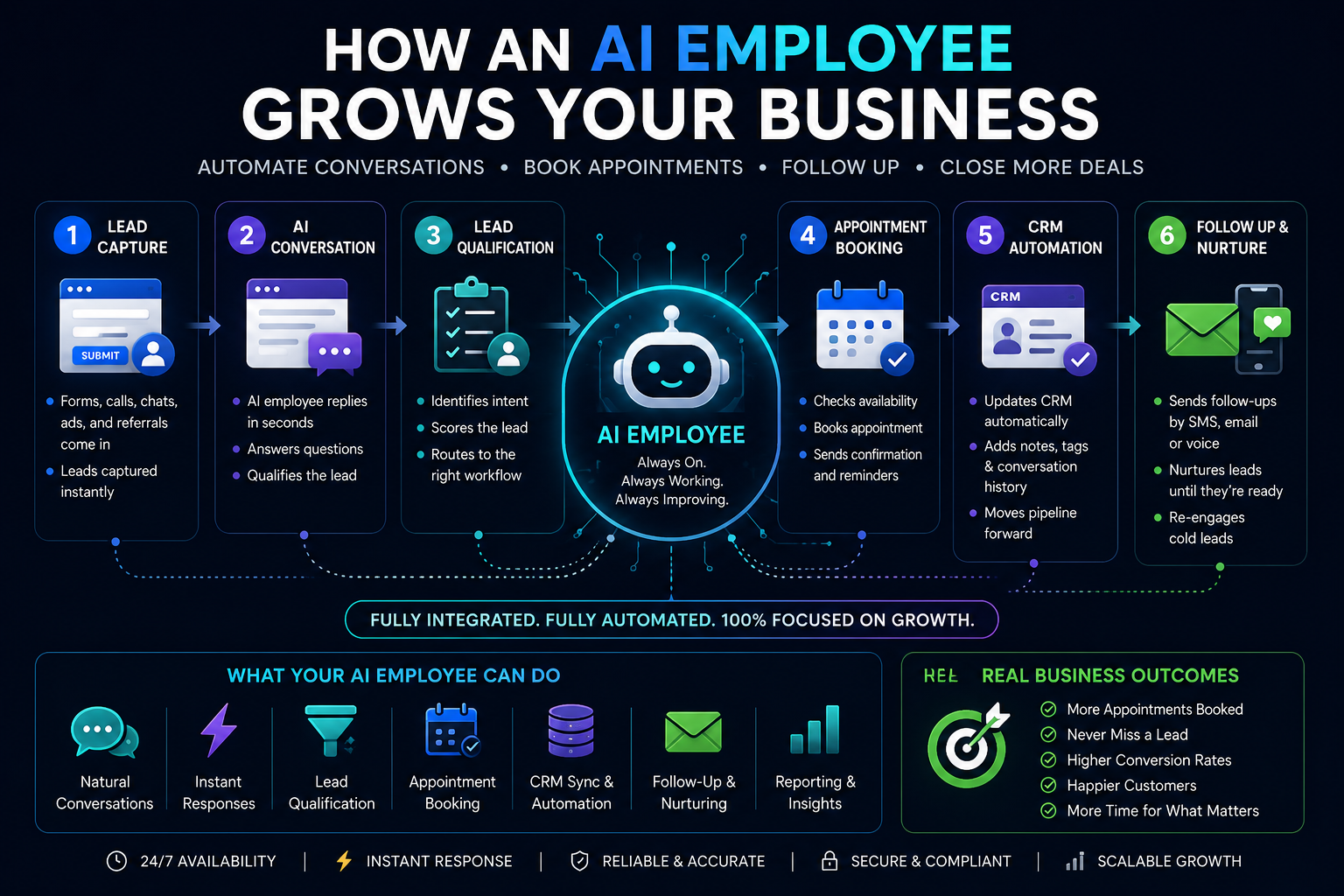
Editorial illustration of the topic; not a live customer dashboard or a measured result.
What the Label Does Not Promise
“AI employee” does not mean the software understands every situation, operates without errors or carries professional responsibility. It cannot be assumed to replace licensed expertise, managerial judgment or a relationship with a customer.
It also does not mean unlimited usage. Providers may charge separately for calls, texts, email, AI consumption or particular features. Ask which products and usage allowances are included and what happens when limits are reached.
Quick question: Which is an action—drafting a reply or sending it?
Sending the reply changes the customer interaction. A draft still needs a person or an authorized workflow to send it. Confirm that distinction when evaluating a product.
Questions to Ask Before Buying
What specific tasks can it complete today?
Which CRM, calendar and communication tools does it actually connect to?
What information can it access, and what actions can it take?
Can customers request a person?
How are incorrect answers, failed actions and complaints handled?
Who maintains the approved business information?
What are the full ongoing costs and cancellation terms?
Request a demonstration of an ordinary inquiry and an unusual one. Check the resulting records as well as the conversation. A plausible reply is not proof of a correct action.
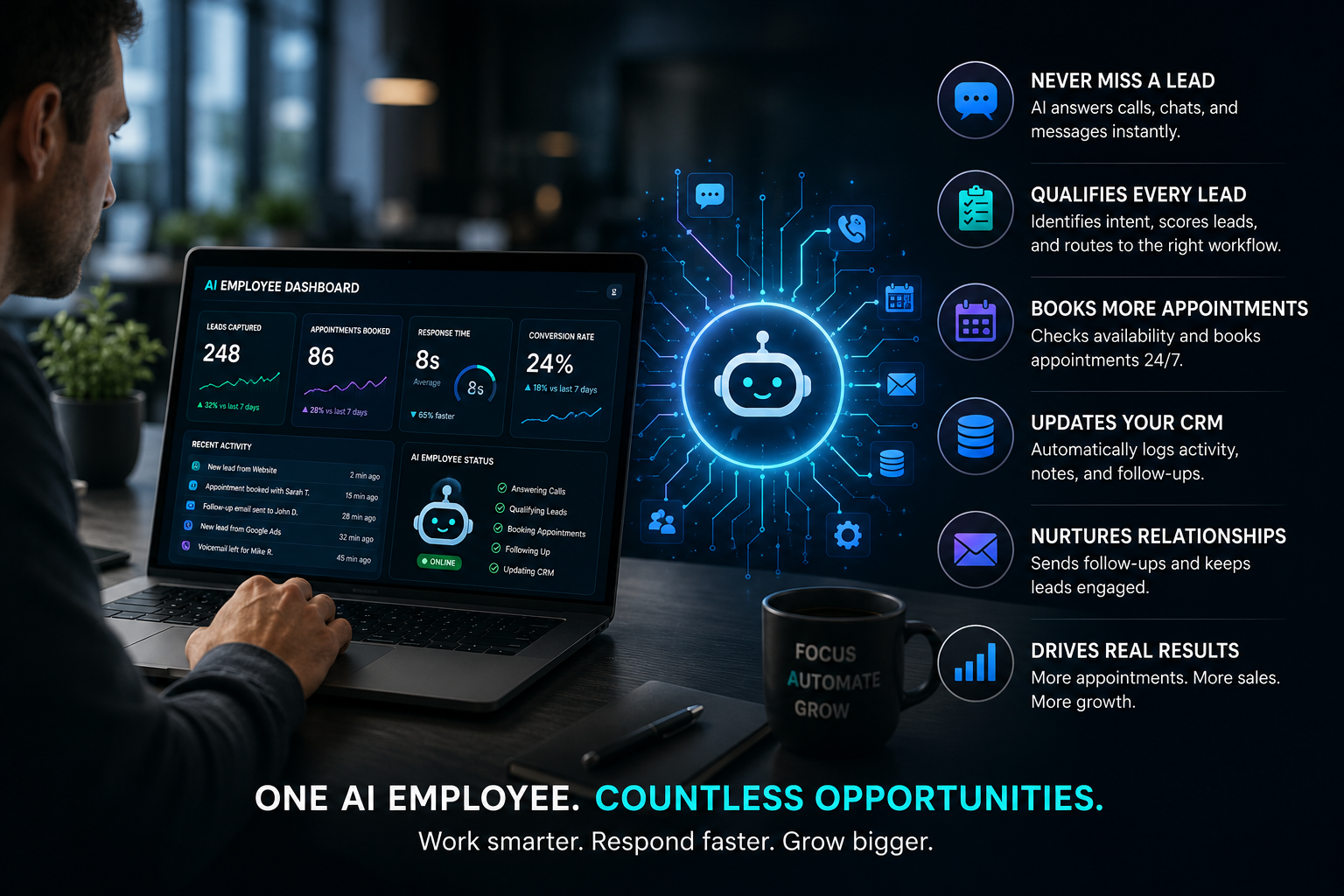
Editorial illustration of the topic; not a live customer dashboard or a measured result.
Privacy, Consent and Oversight
A business should understand how customer information is stored, used and shared. Give the system only the access needed for its role and review provider terms. Avoid placing sensitive personal information into tools without an appropriate basis and controls.
Follow-up must respect the requirements of the communication channel and the customer’s preferences. Being in a CRM is not blanket permission to send marketing through every channel. Human review is particularly important when information is uncertain or the request is regulated.
A Better Way to Evaluate Value
Measure the work the system actually completes: accurate responses, valid appointments, useful summaries, completed handoffs and corrections required. Compare those outcomes with the time and cost of the previous process.
Choose a defined scope and an accountable service relationship. Agency AI Lab helps connect public visibility with managed follow-up systems; a written scope should explain responsibilities and support rather than promise an autonomous replacement for people.
Frequently Asked Questions
Is an AI employee a real employee?
No. It is software. Employment status, professional responsibility and human judgment are not created by that marketing label.
Is every automation an AI agent?
No. A fixed reminder can be automated without AI. Agents use AI to interpret a task and may use connected tools within limits.
Can it run my business automatically?
The label does not establish that capability. Businesses still need accountable people, approved information, oversight and exception handling.
Connect Visibility With Better Follow-Up
Agency AI Lab helps businesses become easier to find and manage the inquiries that follow through websites, content, CRM, booking and appropriate AI-assisted communication.
Sources and Further Reading
OpenAI’s practical guide to building agents explains agents, tools and safeguards. Its technical examples are not evidence of results at a particular business.
NIST AI Risk Management Framework offers voluntary guidance for identifying and managing AI risks. It does not certify a product or guarantee performance.
Trusted Resources
AgencyAILab.com · CertainlySold.net · FLHomesMagazine.com · ElderPlacement.agency · Smart-N-Loans.com
