AI Operating Systems for Business: A Practical Guide
Connected Business Systems · 2026
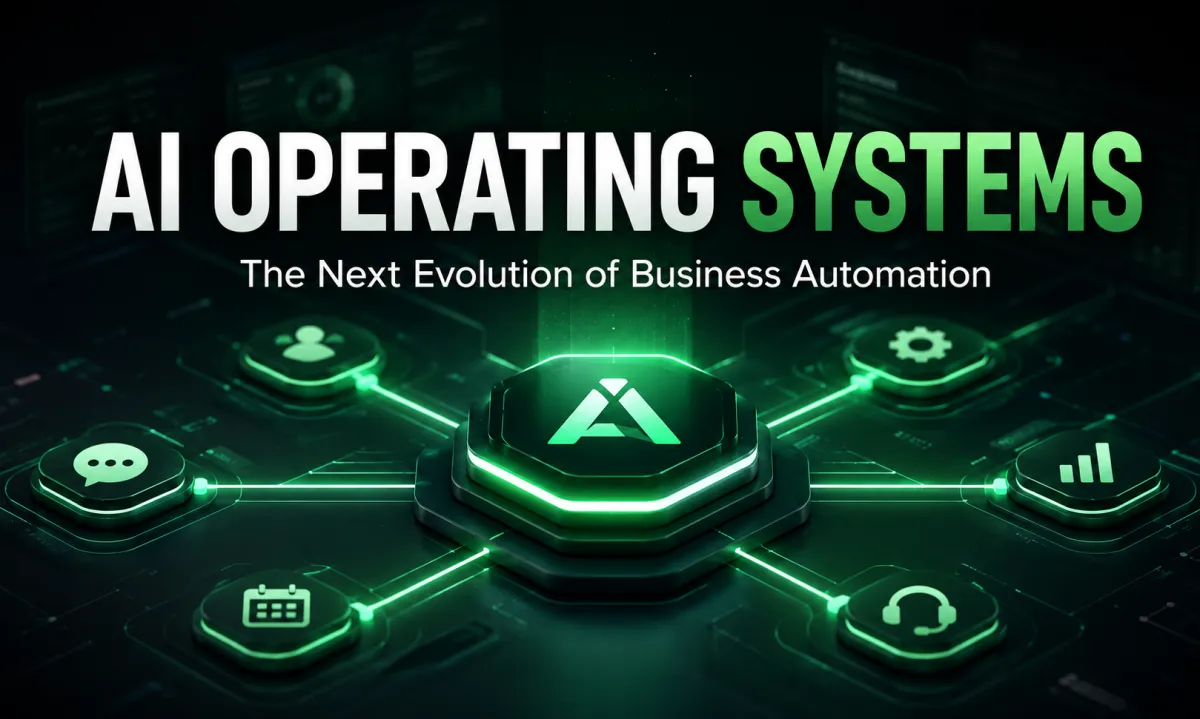
An “AI operating system” for business usually refers to a connected software platform combining CRM, communication, scheduling, workflows and AI tools. It is a product or marketing description, not a standardized category or a replacement for a computer operating system.
By Ray Nadeau · Reviewed October 12, 2026
What the Term Means in Practice
Businesses use several tools to manage the customer journey. A CRM holds relationship information, a calendar manages appointments, communication tools handle calls and messages, and workflows coordinate selected actions. AI may assist with interpreting requests or preparing information.
Calling the combination an operating system can describe its central role, but does not prove that every tool is native, fully connected or autonomous. Ask the provider to identify which functions are included and which depend on outside services.
Why Connected Tools Can Be Useful
Fragmented information can make work harder. If a person books through one system while staff follow up from another, the team may send an unnecessary reminder or miss the context of the request. A reliable connection can reduce that kind of inconsistency.
Consolidation has tradeoffs. One platform may simplify access but introduce migration work, dependence on a vendor or limitations in specialized functions. Keeping a specialized system can be sensible when it handles an important job better.
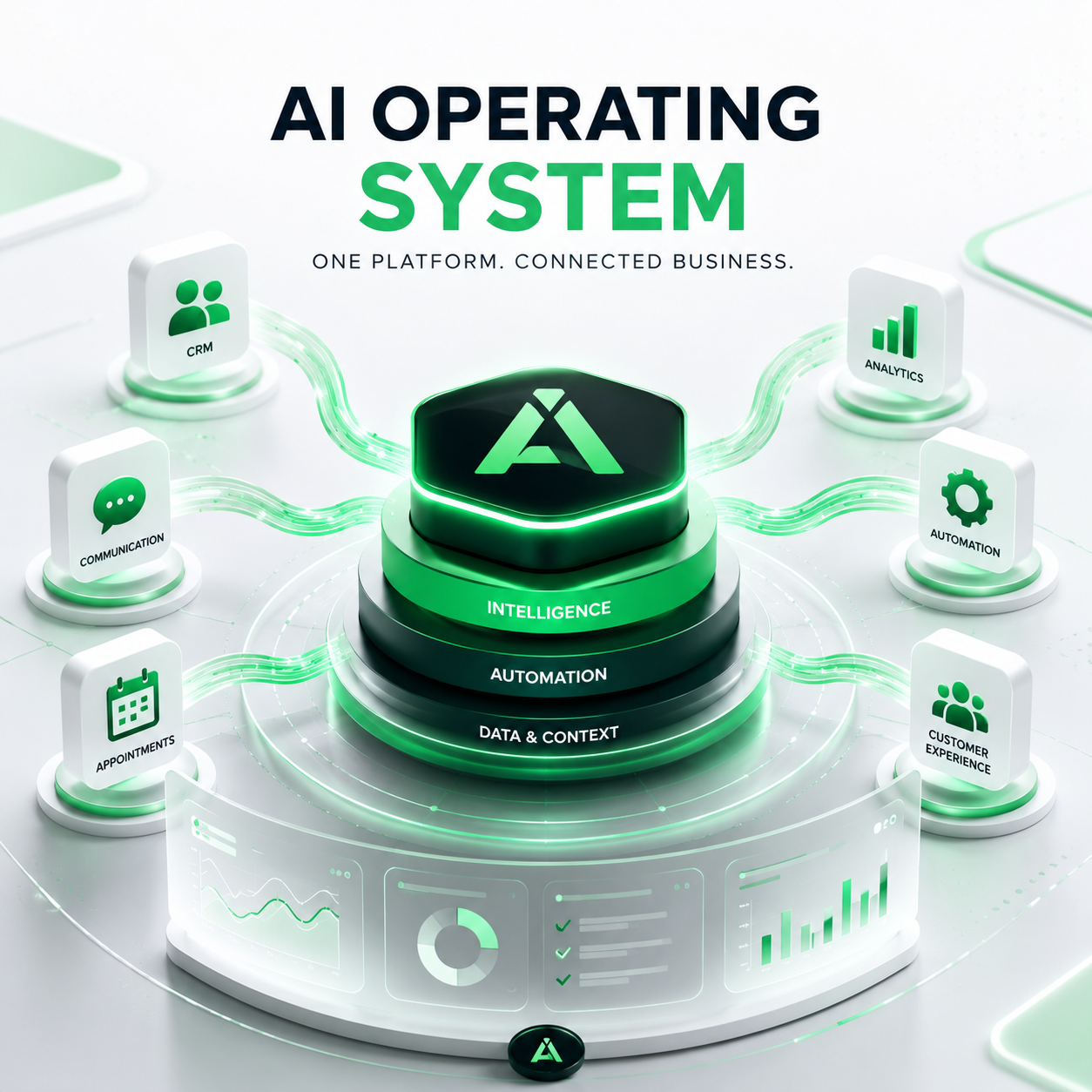
Editorial illustration of the topic; not a live customer dashboard or a measured result.
The Role of AI Within the Platform
AI may interpret a customer message, summarize a conversation or select an approved next step. Conventional workflows can perform predictable tasks such as reminders or internal notifications. Those roles should remain distinguishable.
More autonomy is not automatically better. Confirm what the system can change, which actions require approval and how a person can interrupt it. A well-organized platform should make exceptions visible rather than hide them behind a fluent conversation.
Quick question: Does “all-in-one” mean every connection is native?
No. Some capabilities may depend on integrations, paid add-ons or outside services. Verify each important connection.
Evaluate the Whole System
Does it fit the current CRM, calendar and communication requirements?
Can existing records be migrated and exported reliably?
Which integrations are native and which require other services?
Are access permissions and activity records sufficient?
How are failed connections, downtime and incorrect actions handled?
Who maintains the system and supports the team?
What subscriptions, usage fees and service costs apply?
A demonstration should follow a realistic inquiry from first contact through the final record or appointment. Checking a feature list alone will not show whether the parts work together for your use case.
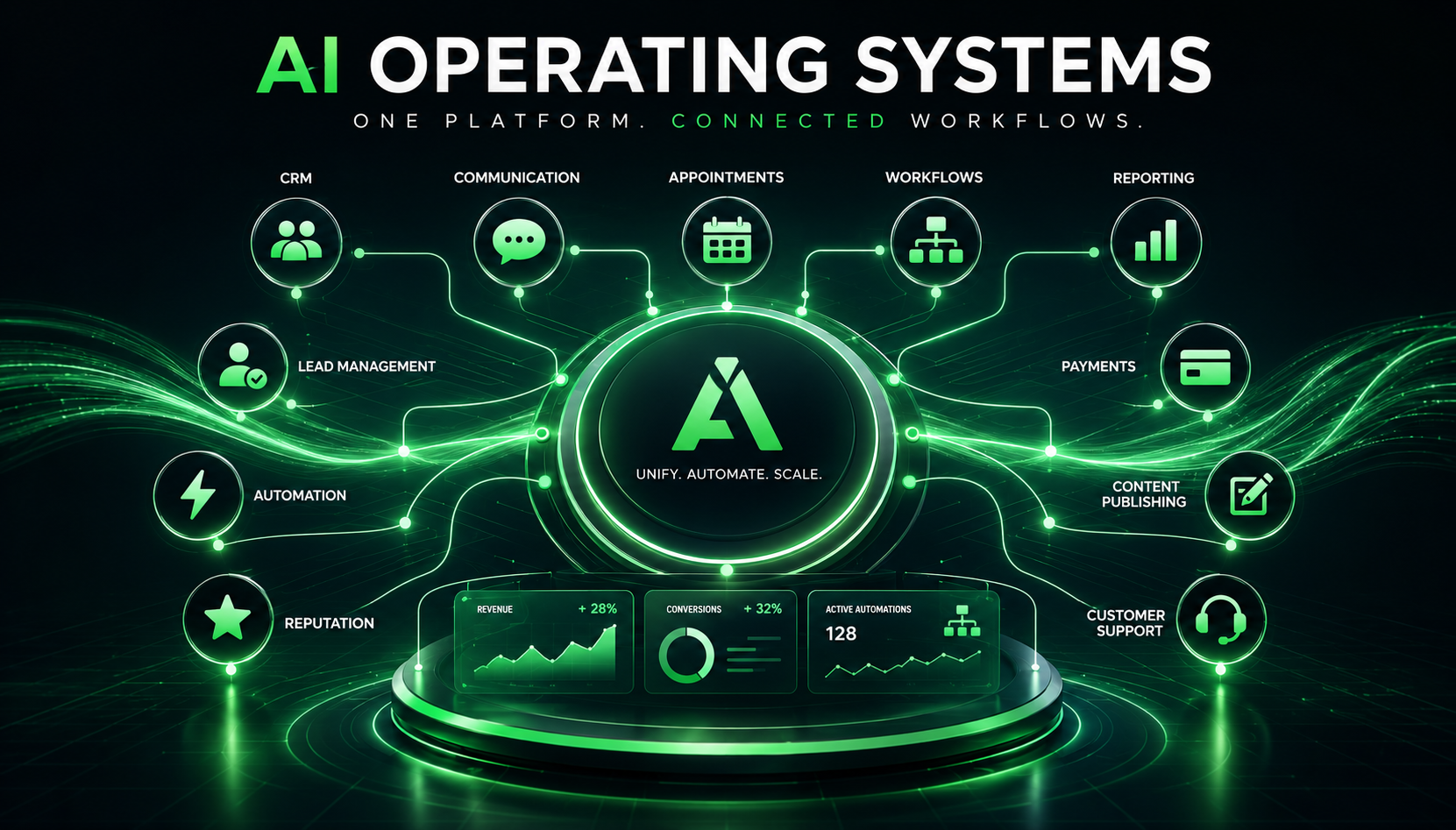
Editorial illustration of the topic; not a live customer dashboard or a measured result.
What an All-in-One Platform Does Not Replace
A general business platform should not automatically become the system of record for every specialized process. For example, a mortgage CRM and loan origination system have different responsibilities. Medical, financial and legal work may require separate systems and professional review.
It also cannot guarantee rankings, sales or efficiency. Connected technology supports operations; its value depends on adoption, accurate information, reliable connections and the service being delivered.
Make the Buying Decision Around Fit
Compare the cost and effort of the current setup with the proposed platform, including migration, training, support, usage charges and exit options. Identify which responsibilities belong to your team and which belong to the provider.
Agency AI Lab’s public offering connects visibility systems with CRM, booking and appropriate AI-assisted follow-up. The decision should be based on the work a business needs done, not on a promise that one subscription can run everything.
Frequently Asked Questions
Is an AI operating system the same as Windows or macOS?
No. In this business context it usually describes a connected application platform. It is not a standardized computer operating-system category.
Will one platform eliminate all other software?
Not necessarily. Specialized systems and external integrations may still be needed. Confirm the scope before migrating.
How can we compare providers?
Compare actual task completion, integration requirements, data export, permissions, support and total cost. Treat product labels as descriptions rather than proof.
Connect Visibility With Better Follow-Up
Agency AI Lab helps businesses become easier to find and manage the inquiries that follow through websites, content, CRM, booking and appropriate AI-assisted communication.
Sources and Further Reading
NIST AI Risk Management Framework offers voluntary guidance for identifying and managing AI risks. It does not certify a product or guarantee performance.
HighLevel’s official pricing page lists platform features and current plans. Features, fees and trial terms can change; confirm them before purchase.
Trusted Resources
AgencyAILab.com · CertainlySold.net · FLHomesMagazine.com · ElderPlacement.agency · Smart-N-Loans.com
